Lime for Lawn: Does Your Ohio Lawn Need It?
Lime is one of the most overlooked treatments in residential lawn care — and in Ohio, it’s one of the most impactful. Many Ohio homeowners apply fertilizer, pre-emergents, and weed control year after year without seeing the results they expect, often because soil pH is preventing those products from working properly. Organic Turf Company helps Ohio homeowners understand when and why lime matters, and how to use it effectively.
What Does Lime Do for Your Lawn?
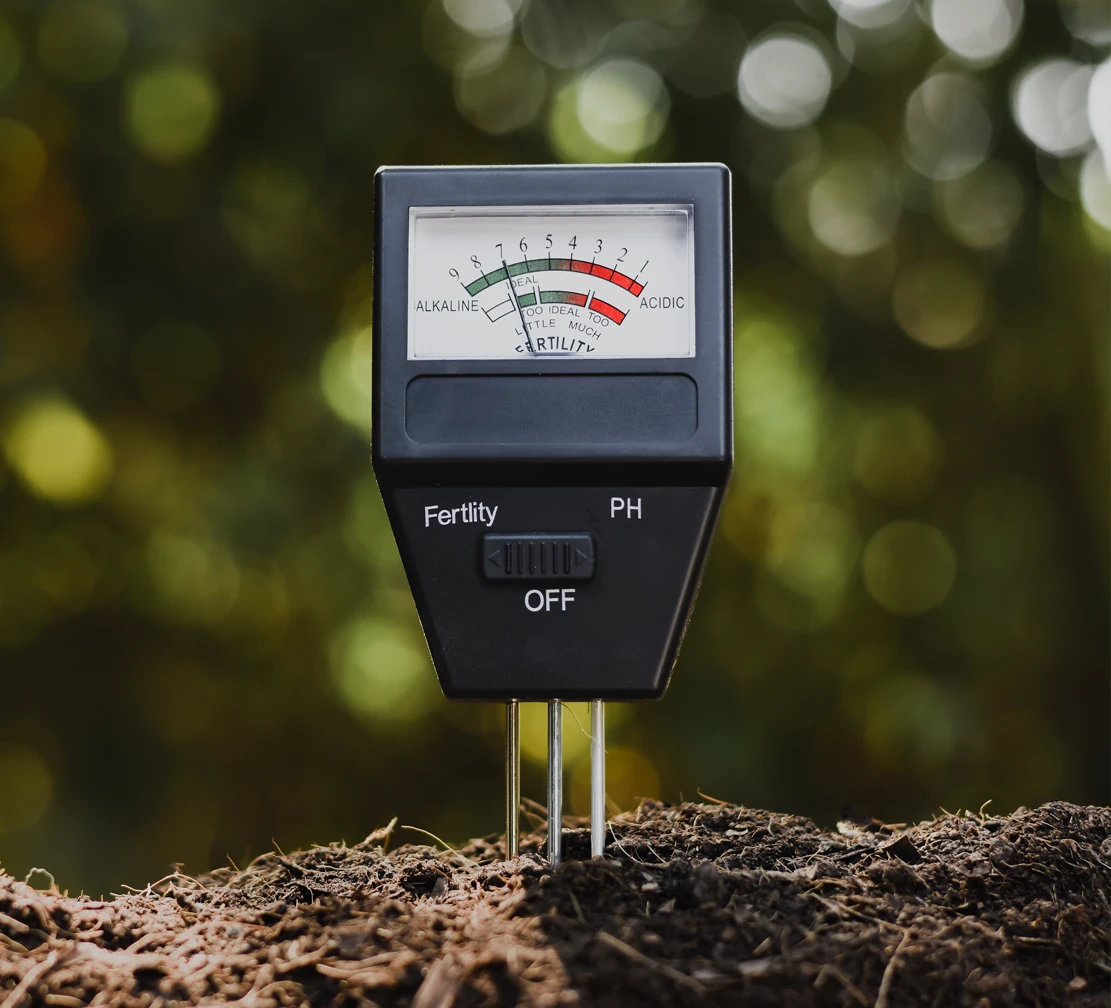
Lime raises soil pH — the measure of acidity or alkalinity on a scale of 0 to 14, where 7 is neutral. Most lawn grasses, including the tall fescue and Kentucky bluegrass common across Ohio, grow best at a pH between 6.0 and 7.0. When soil pH drops below that range, several problems develop: nutrients like phosphorus and potassium become chemically unavailable to grass roots even when they’re present in the soil, fertilizer applications lose much of their effectiveness, and moss and certain weeds that prefer acidic conditions gain a competitive advantage.
Why Ohio Soils Often Need Lime
Ohio soils trend acidic in many parts of the state, particularly in areas with heavy rainfall and high organic matter content. Natural soil acidification occurs gradually over time as rainfall leaches basic minerals from the soil profile and organic matter decomposition releases acids. Lawn maintenance practices — particularly repeated nitrogen fertilizer applications — can accelerate acidification. Without periodic liming, many Ohio lawns drift below the optimal pH range over a period of years without the homeowner being aware.
How to Know If Your Lawn Needs Lime
A soil test is the only way to know for certain whether your lawn needs lime and how much to apply. Ohio State University Extension recommends testing lawn soil every two to three years. Soil test kits are available through OSU Extension offices and many local garden centers. The results will include your current pH, a recommendation for lime application rate if needed, and other nutrient information. Applying lime without testing first risks over-application, which can raise pH too high and create a different set of nutrient availability problems.
Types of Lime for Lawns
Two types of lime are commonly used for lawn application in Ohio:
- Calcitic lime (calcium carbonate) — the standard choice for most Ohio lawns; raises pH and adds calcium without significantly affecting magnesium levels
- Dolomitic lime — contains both calcium and magnesium carbonate; the better choice for Ohio soils that are deficient in both pH and magnesium, which is common in some parts of the state
Pelletized lime is the most practical form for homeowner application — it flows easily through a spreader, produces minimal dust, and can be applied without special equipment. Powdered lime is faster-acting but harder to apply evenly.
When and How to Apply Lime
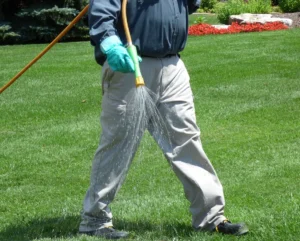
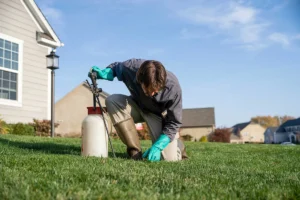
Lime can be applied to Ohio lawns at almost any time the ground isn’t frozen, but fall is the most effective time. Applied in the fall, lime has the entire winter to work into the soil and begin the pH adjustment process, so the benefit is realized by the time active spring growth begins. Apply with a broadcast spreader at the rate recommended by your soil test, water lightly after application to begin incorporation, and avoid applying immediately before heavy rain that might wash material off slopes.
How Long Does Lime Take to Work?
Lime is not a quick fix — pH adjustment is a gradual process. Depending on soil conditions, application rate, and lime type, meaningful pH change typically takes three to six months. This is why fall application is ideal: the lime has time to react in the soil before the spring growing season begins. Pelletized lime works somewhat faster than agricultural ground limestone but still requires time to dissolve and interact with the soil.
Ohio Lawn Care Built on the Right Foundation
Proper soil pH is the foundation of everything else in your lawn care program. The Organic Turf Company serves Ohio homeowners with soil testing services and lime applications timed to maximize effectiveness. If your lawn isn’t responding the way it should despite regular care, pH may be the missing piece. Contact Organic Turf today, and let’s find out.